Boost Your Auto Repair Shop’s Compliance with Call Recording
Objective
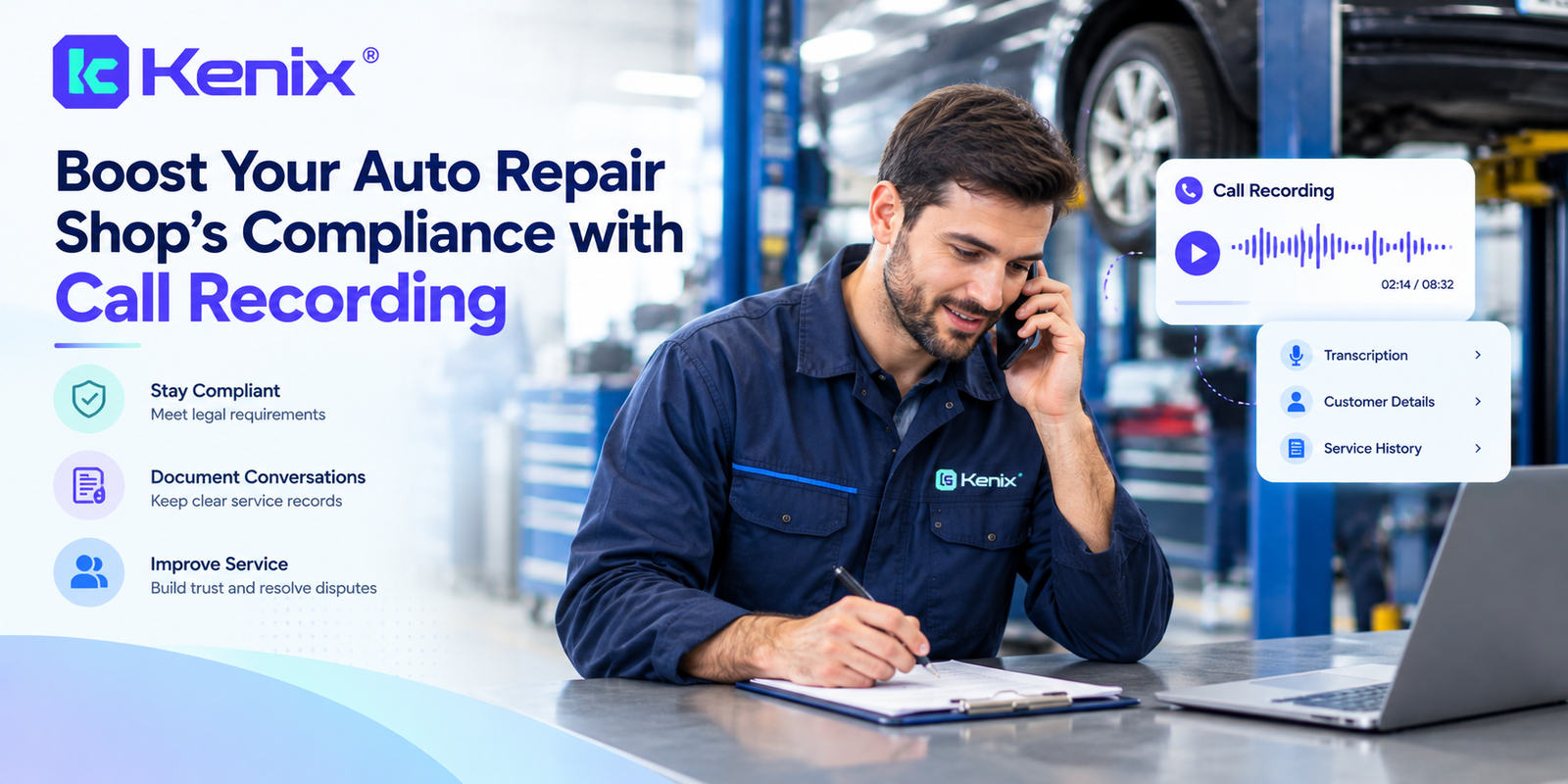
Call recording helps repair shop owners in several ways. It keeps them compliant and documents repair conversations. It also improves service and helps resolve customer disputes. This guide covers auto shop call compliance, from consent to retention.
Key Takeaways
- Look into the laws governing call recording for your repair shop and your customers.
- Make a clear call recording consent procedure.
- Limit access to and retain recordings only as long as needed.
- Listen to call reviews to help identify service advisor performance issues and resolve customer complaints.
- Consider phone software that allows call recording, transcription, and customer record management.
Introduction
A customer says you never explained the repair cost. Your service advisor remembers the conversation differently. Without a clear record, resolving the complaint becomes much harder.
Auto repair businesses use call recording to keep customer conversations clear. It also helps with staff training and improves service records. But recording calls also brings responsibilities. You must know the law. Handle customer consent properly. Also, protect the information you gather.
The good news? It is possible to build a practical process without making your team’s daily work harder.
Why Call Recording Matters for Auto Repair Shops
Call recording for auto repair teams saves customer calls for business use. This includes reviewing repair talks, checking service quality, and documenting staff communication.
For example, a customer may approve a brake repair over the phone but later question the quoted price. A recording may help your manager review what both parties said. Your written estimate, invoice, and service notes should still support the review.
How recorded calls support your business
- Enhanced customer records: Easily capture repair estimate and diagnostic discussions.
- Staff training: Recognize where advisors must repeat costs and next steps.
- Review complaints: Consult the call instead of relying on memory.
- More consistent service: Help managers apply the same communication standards across the team.
Recordings can help with liability protection. However, they don’t guarantee a legal defense or prove that every customer approval is valid.
Understand Call Recording Laws and Consent
Before recording customer calls, understand the legal rules that apply to your business. The United States does not have one simple consent rule for every call and situation.
The Federal Trade Commission warns that state laws vary. They cover recording phone calls and getting consent. If your shop serves customers across state lines, ask a qualified attorney which requirements apply.
For a federal overview, see the FCC’s guide to recording telephone conversations.
What does call recording consent mean?
Call recording consent means you need to ask for permission before recording a conversation. This is required by law. Depending on the jurisdiction and circumstances, the law may require consent from one party or all parties.
Do not assume that an automated announcement always meets your legal obligations.
Practical steps for auto shop call compliance
- Identify the states where your shop operates and where relevant calls originate or end.
- Review applicable recording and privacy requirements with legal counsel.
- Create an approved recording notice and consent procedure.
- Train employees on what to do if a customer objects.
- Review the procedure whenever your business or applicable laws change.
Strong auto shop call compliance begins with a clear policy, not just an active recording feature.
Build a Compliant Call Recording Process
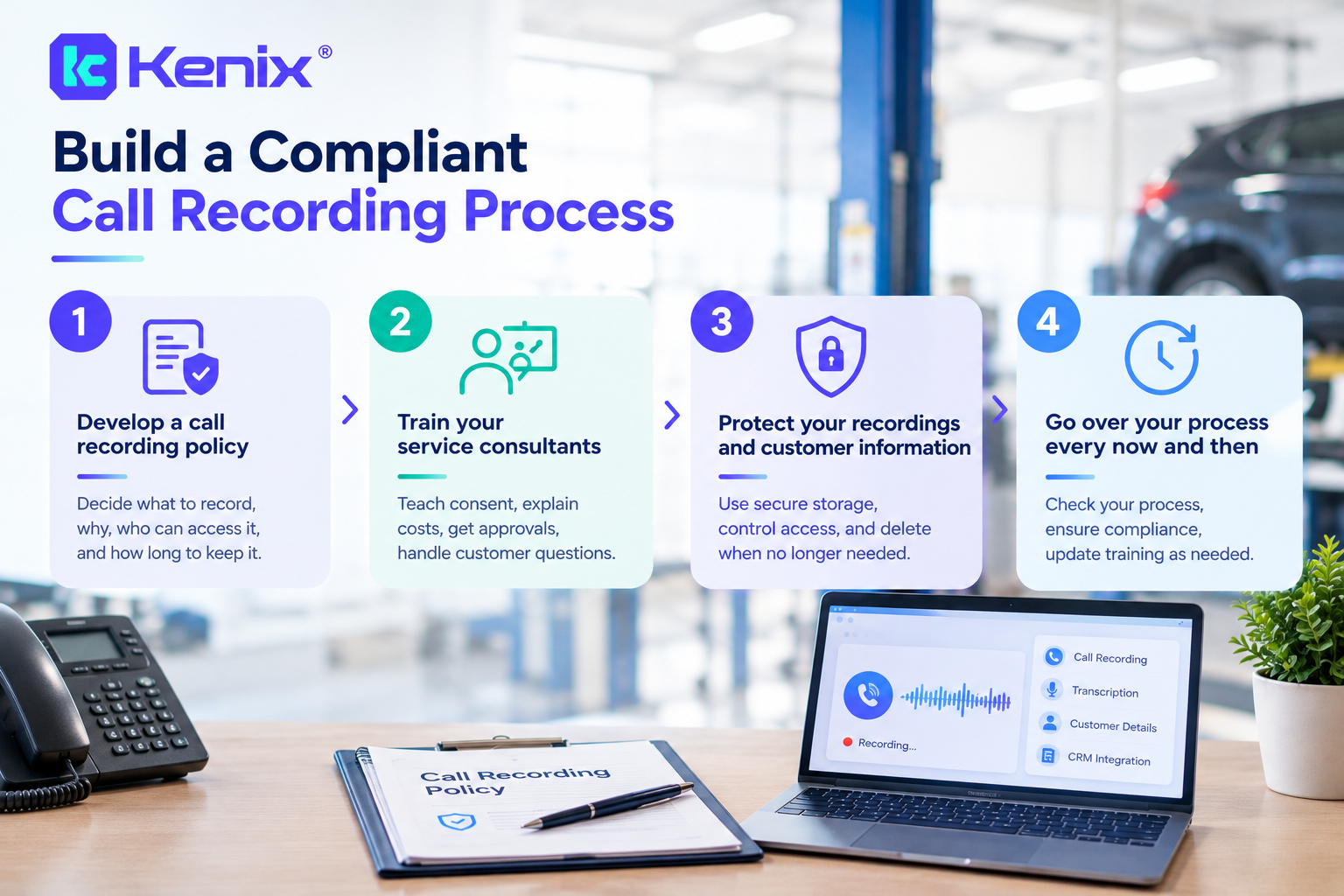
A written process helps your team handle customer conversations consistently. The system also facilitates the training of new employees and the review of how the shop manages recorded calls.
1. Develop a call recording policy
You should describe which calls you record, why you do it, who can access them, and how long you keep them.
2. Train your service consultants
- Train staff in the consent process.
- Clearly define repair costs.
- Obtain approvals.
- Respond to customer inquiries about recording.
3. Protect your recordings and customer information
Data should be stored securely, access controlled, and systematically deleted. Do not keep calls that have no business or legal justification.
4. Go over your process every now and then
Your team should follow the policy, and your phone system should capture all the necessary data. Update training as needed.
Immediate action: Use this checklist before enabling call recording.
| Check | What your shop should confirm |
|---|---|
| Legal review | Applicable recording rules have been checked |
| Customer notice | An approved notification process is ready |
| Staff training | Advisors know how to handle consent and objections |
| Access | Only authorized staff can retrieve recordings |
| Retention | Storage and deletion periods are documented |
| Review | A manager checks the process on a regular schedule |
Use Recordings for Quality Assurance and Dispute Resolution
When a customer disputes an estimate, questions a repair, or complains that an advisor didn’t explain a charge, recording calls can be helpful.
Use recordings as dispute evidence.
Here’s a simpler version:
Think about this: a customer argues over a diagnostic fee after getting their vehicle back.
Your manager looks over the call, checks the estimate, and compares it with the final invoice.
The recording may clarify what the advisor explained. If the advisor missed an important detail, the shop can address the complaint and improve its process.
Dispute resolution calls help repair businesses use facts rather than just memory.
Turn call reviews into training material.
Use approved recordings to find problems. Look for unclear price details, missed booking info, or incomplete follow-ups.
Set clear quality assurance standards, and review calls fairly. If you use automated scoring, have a manager review the results. This step is crucial before deciding on employee performance.
Choose the Right Call Recording Technology
The right software helps your team review calls, keep customer records, and follow procedures. It does this without adding extra admin work.
Look for practical features.
- VoIP phone system: Routes calls and supports recording.
- AI call transcription: Converts conversations into text for easier review.
- Call scoring: Helps managers assess communication quality and find coaching opportunities.
- CRM records: Keeps customer interactions organized alongside relevant service details.
Kenix offers a variety of integrated solutions, including VoIP, CRM, and AI Call Tracking, Smarter Scheduling, and Reputation Management. The site indicates calls can be recorded, transcribed, and added to the CRM. AI analysis scores calls and points out missed sales opportunities.
As noted previously, these solutions can be valuable to help better manage your business, but your shop is still ultimately responsible for legal obligations. Check the platform controls to manage recording, transcription, and retention. Determine how the data is handled and then make your business decision.
Connect call compliance with better customer follow-up.
Call records can help your team spot missed bookings and unanswered customer questions. When used responsibly, this information can help recover revenue. It also assists staff in following up on unbooked appointments or estimates that need approval.
You can boost your marketing by:
- Improving your website.
- Investing in local SEO.
- Tracking key metrics.
- Answering customer questions with content.
- Optimizing for mobile users.
- Using email marketing.
- Reviewing performance weekly.
These steps will help your overall efforts.
These activities support customer acquisition and retention, while call recording helps your team manage phone interactions more consistently.
Make Every Customer Conversation Count
Good auto shop call compliance starts with clear rules, proper consent, secure records, and regular staff training.
Recording technology lets your team:
- Review customer conversations
- Handle complaints
- Improve service quality
However, it can’t replace legal advice or solid business practices.
Review your current phone process and identify what needs improvement. Explore how Kenix can help your shop by managing calls. It also reviews advisor performance and follows up on missed revenue opportunities.
CTA: Visit Kenix.io to explore its VoIP, CRM, and AI call analysis tools for auto repair shops.
Is it legal to record customer calls at an auto repair shop?
That depends on the applicable federal and state laws and circumstances of the call. Before recording customer conversations, review the applicable requirements.
Do auto repair shops need consent to record phone calls?
In some jurisdictions, all parties must consent; in others, the rules are different. Check the laws that apply to your business and set up an appropriate notification process.
Can recorded phone calls help resolve repair disputes?
Yes. Recordings can clarify discussions about repair estimates, extra work, and customer approvals. Read them with written estimates, invoices, and service notes.
How long should an auto repair shop keep call recordings?
There is not one retention period for all recordings. Establish a schedule that complies with legal requirements, meets business needs, and meets recordkeeping or dispute requirements.
What features should auto repair shops look for in call recording software?
- Check recording controls.
- Verify access permissions.
- Ensure secure storage.
- Review transcription options.
- Look at CRM records.
- Use helpful call review tools.
Check that the platform helps with your compliance process. Don’t just assume it ensures compliance.
Back to the previous article