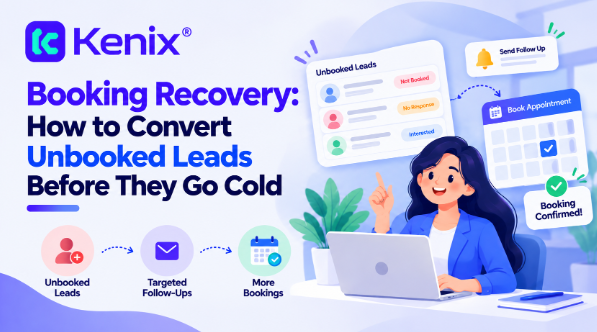
Booking Recovery: How to Convert Unbooked Leads Before They Go Cold
Objective
We help your auto repair shop identify unbooked leads, follow up at the right time, and turn genuine service opportunities into confirmed appointments.
Key Takeaways
- An unbooked lead is not automatically a lost customer.
- A practical 24-48-72 hour process gives your team a clear follow-up plan.
- High-intent leads need faster, more personal attention than casual inquiries.
- CRM and appointment data can help your team see which opportunities still need action.
- Good unbooked lead follow-up should help the customer make a decision rather than send repeated sales messages.
Introduction
A customer calls your auto repair shop about a brake job, asks about the price, or checks for an available appointment. They sound interested, but they do not book. Your front desk gets busy, the day moves on, and that lead can quietly disappear from the pipeline.
This is where booking recovery auto repair becomes useful. Booking recovery is the process of identifying customers who showed interest but did not schedule and giving them a timely reason to continue the conversation. It does not mean repeatedly messaging every lead. It means understanding why the customer did not book, choosing a sensible follow-up method, and making the next step easy.
In this guide, we will show you how unbooked lead follow-up can help your shop recover genuine booking opportunities before they go cold.
Table of Contents
- The Lead Decay Curve
- Why Auto Repair Leads Don’t Book
- The 24-48-72 Hour Follow-Up Protocol
- Lead Scoring for Auto Shops
- CRM Automation Setup
- Making Booking Recovery Part of Your Marketing
- Measuring Results
- FAQs
The Lead Decay Curve: Why Timing Matters
Lead decay means a sales opportunity can become less useful when there is no timely response or follow-up. It does not mean every lead becomes worthless after a fixed number of hours. Customer needs, urgency, price, and competition all matter.
For an auto repair shop, a cold opportunity may start with something as simple as a customer asking for availability and then going quiet.
There is no single follow-up time that works for every repair inquiry. A customer asking for an appointment tomorrow has a different level of intent from someone casually asking how much brake service costs. The first lead may need action within hours; the second may need useful information before they are ready to schedule.
Here’s the thing: you do not always need more leads. You also need a reliable process for handling the leads your shop has already paid to generate.
Why Auto Repair Leads Don’t Book
There are several reasons a customer may not schedule immediately:
- They want to compare prices.
- They need to check their schedule.
- They are unsure how urgent the repair is.
- They are waiting for another person to approve the work.
- Your team did not follow up after the first conversation.
This is why auto repair lead re-engagement should start with the reason the customer contacted you.
For example, someone asking whether you have an opening tomorrow has a different level of intent than someone casually asking about brake repair costs.
The follow-up should reflect that difference. Sending the same message to both customers wastes time and can make your outreach feel like a sales script.
Your lead pipeline should make these differences easy to see.
The 24-48-72 Hour Follow-Up Protocol
A practical unbooked lead follow-up process gives your team a clear starting point. The 24-48-72 framework below is a working process, not a universal rule. Adjust it according to customer intent, repair urgency, and the conversation you already had.
| Timing | Main Goal | Suggested Action |
| Within 24 hours | Reopen the conversation | Short SMS or phone call |
| Around 48 hours | Add useful information | Email or personal message |
| Around 72 hours | Make one final active attempt | Call or direct message |
SMS Re-engagement
When texting leads, be mindful of the information you include.
“Hi, Mike. Are you still in need of the brake service? We have appointment times available if you would like us to set one aside?”
This message is useful because it helps the lead remember his/her/their reason for contacting you and provides the lead with the next step. It is not pushing the lead to make an appointment.
Email Nurture
Email can work when the customer needs more information before making a decision. You can:

- Explain the service.
- Answer a common concern.
- Share useful maintenance information.
- Remind them what they originally requested.
- Give them one clear way to schedule.
Phone Callback
Use a phone call when the lead showed strong intent. Before calling, review the customer’s previous details so they do not have to explain the same problem again.
The goal is not to chase. The goal is to remove the reason the customer stopped moving toward an appointment.
Lead Scoring for Auto Shops
Not every unbooked lead deserves the same amount of attention.
A simple scoring process can separate leads into three groups:
High intent: Asked for an appointment, availability, estimate, or specific repair.
Medium intent: Leads who want to know the details of a repair and/ or when a repair will be done.
Low intent: Leads who have not defined when or why they need a repair and/ or are unresponsive after multiple reasonable attempts.
A Simple Lead Recovery Decision Table
| Customer behavior | What it may indicate | Next step |
| Asked for an appointment | Strong booking intent | Call or text promptly |
| Asked for availability | Ready to discuss scheduling | Offer available times |
| Asked about price | Still evaluating | Answer the concern and offer help |
| Received an estimate but did not book | Possible price or trust concern | Follow up with useful clarification |
| No response after several attempts | Lower current intent | Move to longer-term nurture |
No response after several attempts Lower current intent Move to longer-term nurture
This approach helps your team spend more time on leads that have already shown a clear reason to buy.
Your opportunity rate can then show how many qualified opportunities become appointments.
Booked opportunities ÷ qualified opportunities × 100 = opportunity-to-booking rate
Review this number regularly rather than judging your marketing only by how many inquiries it creates.
CRM Automation Setup

A good auto repair CRM should help your team see which leads still need action. Kenix describes its platform as bringing customer records, calls, scheduling, and other shop communication tools into one system, with Booking Recovery focused on re-engaging unbooked leads before they go cold.
That matters when your front desk is handling calls, customers, technicians, estimates, and appointments at the same time.
With lead pipeline tracking, your team can mark each inquiry as:
New → Contacted → Follow-Up Needed → Booked → Lost/Unresponsive
From there, automation can prompt the right action instead of relying on someone to remember every follow-up.
The best setup is not one that sends the most messages. It is one that helps your team know who needs attention, why they need it, and what the next useful action should be.
Make Booking Recovery Part of Your Marketing
Booking recovery works best when it supports your wider marketing work.
- Build a Website That Actually Converts Visitors Into Customers: Make your phone number, services, and booking options easy to find.
- Invest in Local SEO Before Spending More on Advertising: Google says Business Profiles help local customers find businesses, review services, and access booking options.
- Track Marketing Metrics That Actually Matter: Monitor leads, response time, appointment rate, recovered bookings, and opportunity rate.
- Create Content That Answers Customer Questions: Answer questions about repairs, service costs, maintenance, and warning signs.
- Optimize for Mobile Users: Make calling and appointment requests easy from a phone.
- Use Email Marketing to Stay Top of Mind: Send useful service information instead of constant sales messages.
- Review Your Marketing Performance Every Week: Look at where leads stopped moving. If many customers ask for estimates but few books, the problem may not be lead volume. It may be follow-up, pricing concerns, scheduling, or how the offer is presented.
Measure What You Recover
Start with four numbers:
- Unbooked leads: How many inquiries still need attention?
- Follow-up rate: How many received the planned follow-up?
- Re-engagement rate: How many replied after follow-up?
- Booking rate: How many qualified leads became appointments?
These numbers help you find where the lead pipeline is losing momentum. For example, a strong follow-up rate with a low booking rate may point to pricing, availability, customer trust, or another issue that follow-up alone will not fix.
Kenix places Booking Recovery within a broader revenue recovery approach that also covers missed calls, appointments, estimates, and reviews. Its website says the goal is to close revenue gaps in customers a shop already has rather than relying only on acquiring new customers.
The Lead You Already Paid For May Still Be Worth Recovering
A customer who has not booked is not automatically a lost customer. Sometimes the customer needs a clearer answer, a better appointment option, or simply a timely reminder that your shop is ready to help.
A clear booking recovery auto repair process gives your team a practical way to handle those opportunities instead of letting them disappear from the pipeline.
The key is simple:
Identify the lead → understand the reason for non-booking → choose the right follow-up → make scheduling easy → measure the result.
Start Recovering the Leads You Already Have
Review your unbooked leads this week. Identify the high-intent opportunities, apply a sensible follow-up schedule, and connect your CRM with appointment scheduling so your team can move from conversation to booking with less manual work.
If your shop is already generating inquiries, improving how you handle the ones that do not book can be a practical part of your wider revenue recovery framework.
Frequently Asked Questions
What is booking recovery for an auto repair shop?
Booking recovery is the process of identifying unbooked service inquiries and following up with customers who have not yet scheduled an appointment.
How do you follow up with an unbooked auto repair lead?
Start with a short, relevant message that refers to the customer’s original request and offers a simple next step, such as checking appointment availability.
How long should you wait before following up with a repair lead?
A practical starting point is within 24 hours, followed by additional contact at 48 and 72 hours when appropriate. The timing should reflect customer intent and the type of repair.
What should you text a customer who has not booked?
Keep your message short, and include information that is likely to prompt the customer to schedule a repair. You can include the date of your last communication, or ask if they want you to check your schedule to see if you have any open repair windows.
Can CRM automation help recover unbooked leads?
Yes. With a CRM, your employees will be able to easily see the leads that are not scheduled for repair and share information about the customers with each other. The CRM can also help your employees to organize the status of leads that have not been scheduled for repair and prompt follow-up.
Back to the previous article