
Approval Recovery: How to Convert Declined Estimates into Revenue

Objective
Show you how to turn unapproved repair estimates into future repair orders through better follow-up, clear communication, and measurable estimate conversion.
Key Takeaways
- A declined estimate is not always a lost customer.
- Approval recovery shop processes give advisors a clear way to follow up.
- A second voice call can address concerns that a text message cannot.
- Tracking authorization rate helps you see whether your process is working.
- CRM follow-up can keep pending estimates visible instead of letting them disappear.
Introduction
A customer says, “Let me think about it,” and drives away with a $1,200 repair estimate. For many repair shops, that estimate quietly becomes a lost sale.
But a declined estimate does not always mean the customer has said no forever. With a clear declined estimate recovery auto repair process, your shop can follow up, answer concerns, and give customers a simple way to approve the work when they are ready.
The Federal Trade Commission recommends that consumers get written repair estimates that identify the repair, parts, and expected labor charges, with customer approval required before work above a specified amount in situations covered by applicable law.
Table of Contents
- Why Declined Estimates Create Lost Revenue
- What Approval Recovery Means
- How to Recover a Declined Estimate
- Handle Price and Timing Concerns
- Measure Estimate Conversion
- Build a Repeatable Recovery Process
- Conclusion
- FAQs
Why Declined Estimates Create Lost Revenue
Here’s the thing: your shop has already done much of the work.
A technician inspected the vehicle. Your team identified the repair. An advisor prepared the estimate and explained it to the customer.
Then the customer says no.
That does not automatically mean the repair will never happen. The customer may need time to review the cost, speak with a family member, arrange financing, or simply understand why the repair matters.
The problem starts when nobody follows up.
The U.S. Bureau of Labor Statistics reports that automotive service technicians and mechanics held about 825,800 jobs in 2025, with employment projected to grow 5% from 2025 to 2035.
That makes efficient use of technician time and existing customer opportunities important for shop operators.
Think of the estimate as an open sales opportunity.
Instead of marking the repair as lost, record it as pending. That small change can give your team a clear reason to contact the customer again.
What Approval Recovery Means for an Auto Repair Shop
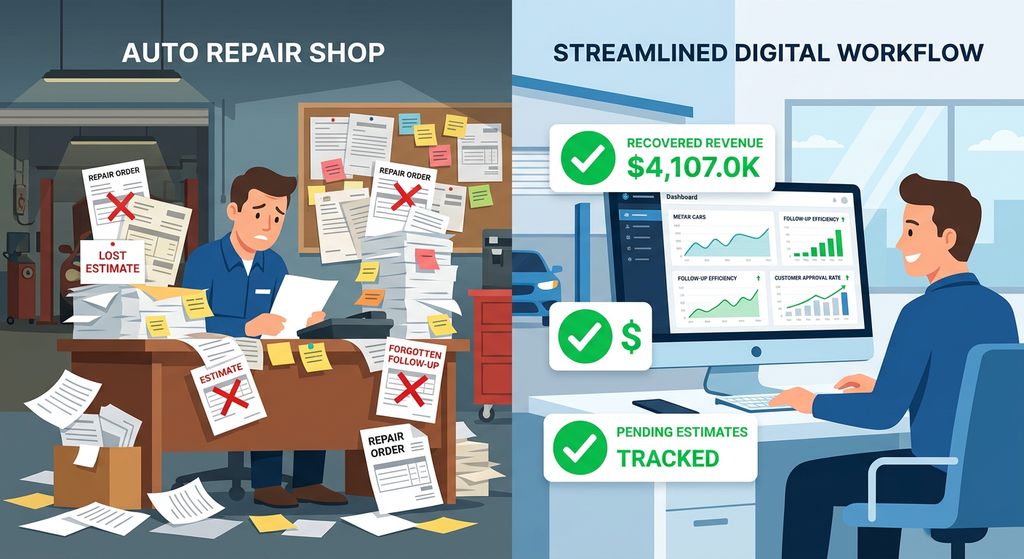
Approval recovery is the process of following up with customers who received repair estimates but did not approve the recommended work.
In practical terms, declined estimate recovery in auto repair means moving from:
Estimate → Declined → Follow-up → Customer response → Approval → Repair order
The goal is not to pressure someone into buying a repair.
The goal is to make sure a customer who needs more information or more time does not get forgotten.
Where an approval recovery shop process helps
A good process can help your team:
- Keep pending estimates visible
- Record why customers declined
- Schedule future follow-ups
- Track customer responses
- Route difficult cases to a manager
- Measure recovered repair revenue
Kenix positions Approval Recovery around pending estimates and following up until the customer makes a decision. Its platform also brings CRM activity, calls, appointments, and approvals into one system.
That approach turns follow-up from a task someone may forget into a defined shop process.
How to Recover a Declined Estimate Step by Step
The best auto repair authorization recovery process starts with one simple question:
Why did the customer decline?
1. Record the reason
Was it:
- Price?
- Timing?
- Lack of urgency?
- Need for another opinion?
- Need to discuss it with my family?
- Need for financing?
Without this information, the next conversation becomes a guess.
2. Set a follow-up date
Do not depend on an advisor remembering every pending estimate.
Use your CRM follow-up process to assign the next action.
3. Make the second contact useful
A second voice call should not sound like:
“Are you ready to approve the repair?”
Instead, address the reason for the delay.
For example:
“We wanted to check whether you had any questions about the repair we recommended during your last visit.”
That gives the customer room to explain what stopped the approval.
4. Give the customer a clear next step
The next step could be:
- Schedule the repair
- Speak with a manager
- Review available payment options
- Ask a technical question
- Set a later follow-up
This is where declined work follow-up becomes useful instead of repetitive.
Handle Price and Timing Concerns the Right Way

Not every customer needs a discount.
If price is the issue, your advisor can explain the repair, review available options, or discuss an appropriate financing offer when the shop provides one.
A manager callback can also help when the customer has a pricing or service concern that needs additional attention.
A coupon campaign may make sense for selected deferred services, but discounting every declined repair can train customers to wait for a lower price.
The better approach is simple: find out what stopped the approval first.
A practical example
Imagine a customer receives an estimate for several recommended repairs.
They approve the urgent work but postpone another item because the total cost is too high.
Instead of treating that second repair as lost, your team records it as deferred.
A follow-up later can remind the customer about the recommendation and offer a convenient appointment.
No pressure. Just a clear next step.
Measure Estimate Conversion, Not Just Sales
If you want to improve authorization rate, you need to know where your estimates stand.
Start with a simple weekly report.
| Metric | What to Track |
| Estimates created | Total repair estimates written |
| Approved estimates | Estimates that became repair work |
| Pending estimates | Customers who have not made a final decision |
| Declined estimates | Customers who rejected the work |
| Recovered estimates | Previously declined work later approved |
| Recovered revenue | Revenue from recovered work |
| Authorization rate | Approved estimates ÷ total estimates |
Your numbers create the baseline.
For example, if your shop has 100 estimates and 60 become approved repair orders, your starting authorization rate is 60%. From there, you can test whether better follow-up changes the result.
This is the heart of authorization rate optimization.
Build a Repeatable Approval Recovery Shop Process
The strongest shops do not leave recovery to chance.
Build a simple workflow:
Estimate created → Customer decision → Pending/declined → CRM follow-up → Advisor contact → Second voice call → Manager callback if needed → Appointment → Approved repair
Your CRM should show the customer, vehicle history, estimate status, previous communication, and next action.
That gives advisors the information they need before contacting the customer.
It also gives managers a way to review performance without asking every advisor for a manual update.
Use marketing to support recovery.
Approval recovery works best when it sits inside a larger marketing process.
Seven useful areas include:
- Build a Website That Actually Converts Visitors Into Customers
- Invest in Local SEO Before Spending More on Advertising
- Track Marketing Metrics That Actually Matter
- Create Content That Answers Customer Questions
- Optimize for Mobile Users
- Use Email Marketing to Stay Top of Mind
- Review Your Marketing Performance Every Week
These activities help bring customers in and keep your shop visible. Your recovery process then helps your team act on opportunities that already exist in your customer records.
A Simple Recovery Plan You Can Start This Week

You do not need to rebuild your entire operation.
Start with your last 30 to 60 days of declined estimates.
Separate them into:
- Price concerns
- Timing concerns
- Deferred repairs
- No clear reason
- Customers who cannot be reached
Then assign each pending opportunity a next action.
Review the results every week.
This gives you a practical revenue recovery framework without adding unnecessary work to your advisors.
Turn More Pending Estimates Into Approved Work
A declined estimate should not automatically disappear from your system.
Customers may need more time, clearer information, a manager callback, or a simple reminder before they are ready to act.
That is why approval recovery shop processes matter.
Kenix positions Approval Recovery as one part of a broader platform designed to help shops address revenue gaps from unapproved estimates, missed calls, unbooked leads, no-shows, and review opportunities.
The next step is simple: review your pending estimates, identify where follow-up stops, and build a process that keeps those opportunities visible.
Want a practical starting point?
Create a declined-estimate recovery checklist for your advisors and review it during your weekly marketing meeting.
Frequently Asked Questions
What is approval recovery in auto repair?
Approval recovery is the process of following up with the customer who has received repair estimates but did not approve the work recommended.
How can an auto repair shop recover declined estimates?
Record why the customer declined, schedule follow-up, answer their concerns, and give them an easy way to schedule the repair when they are ready.
How can shops improve their authorization rate?
Review where customers stop approving recommended work. Track approved, declined, and estimates pending. Regular follow-up will help your team work on those opportunities.
What should a service advisor say during a second voice call?
Ask whether the customer has questions about the recommended repair and address the reason they delayed approval instead of simply asking them to buy the repair.
Can CRM follow-up help recover repair revenue?
Yes. A CRM makes pending estimates visible, captures previous customer interactions, assigns follow-up actions, and offers managers a better view of recovery activity.
Back to the previous article